
AI Prompt Engineering Guide for Marketing (2026) – Complete

If you’re a marketer who’s tried using AI tools like ChatGPT, Claude, or Gemini, you’ve probably experienced this: you ask for something, and the result is either too generic, too long, or just misses the mark entirely. The good news? It’s not the AI’s fault. It’s all about how you ask.
Welcome to the world of prompt engineering, the skill that separates marketers who struggle with AI from those who make it work like magic.
In this guide, you’ll learn exactly how to craft prompts that generate marketing content worth publishing, campaigns that convert, and strategies that actually make sense for your business. No fluff, no technical jargon: just practical techniques you can use today.
What is AI Prompt Engineering and Why Every Marketer Needs It
Prompt engineering is the art and science of communicating with AI models to get the results you want. Think of it as giving instructions to a highly talented intern who’s brilliant but needs clear direction.
Here’s why this matters for marketing:
The Current Reality: Most marketers waste 60-70% of their time reformulating prompts and editing AI outputs because their initial instructions weren’t specific enough.
The Opportunity: Marketers who master prompt engineering can produce a week’s worth of content in a single afternoon, generate multiple campaign variations in minutes, and test messaging strategies at a scale that was impossible before.
The difference between average results and exceptional results often comes down to a few extra sentences in your prompt. That’s the power we’re unlocking today.
Understanding Prompt Engineering: From Basic to Advanced
Let’s break down what prompt engineering actually involves.
The Basic Level
At its simplest, a prompt is just a question or instruction you give an AI:
“Write a blog post about email marketing.”
This works, but it’s like telling a chef to “make food.” You’ll get something, but probably not what you wanted.
The Intermediate Level
Better prompts include specifics:
“Write a 1,000-word blog post about email marketing best practices for e-commerce businesses, focusing on abandoned cart sequences.”
Now we’re cooking. You’ve added length, audience, and focus.
The Advanced Level
Expert prompts incorporate context, constraints, format requirements, and desired outcomes:
“You’re an e-commerce email marketing specialist with 10 years of experience. Write a 1,000-word blog post for online store owners who are struggling with cart abandonment. Focus on abandoned cart email sequences. Include 3 real examples, use a conversational tone, and structure it with H2 headings. The goal is to convince them to implement a 3-email sequence this week.”
See the difference? This prompt gives the AI everything it needs to deliver exactly what you want.
Why Prompt Engineering is Crucial for AI Marketing Success
Here’s the reality: AI tools are now commoditized. Everyone has access to the same models. The competitive advantage doesn’t come from having AI: it comes from using it better than your competitors.
The Business Impact
Time Efficiency: A well-crafted prompt can reduce revision cycles from 5-6 iterations down to 1-2, saving hours per week.
Quality Output: Better prompts mean content that requires minimal editing, campaigns that are ready to deploy, and strategies that are immediately actionable.
Cost Savings: When you get it right the first time, you’re not burning through API credits or paying team members to fix subpar outputs.
Competitive Edge: While others are still figuring out basic AI usage, you’ll be running sophisticated multi-channel campaigns with AI assistance.
The Marketing-Specific Benefits
In marketing specifically, prompt engineering helps you:
- Maintain brand voice consistency across all AI-generated content
- Generate audience-specific variations at scale
- Test multiple messaging angles simultaneously
- Create comprehensive campaigns in a fraction of the time
- Optimize content for specific platforms and formats
Core Principles of Effective Marketing Prompts
Before we dive into specific frameworks, let’s establish the foundational principles that make any marketing prompt effective.
Principle 1: Clarity Beats Cleverness
Your prompt should be crystal clear about what you want. Avoid vague language like “make it compelling” or “create engaging content.” Instead, specify exactly what “compelling” or “engaging” means in your context.
Vague: “Write engaging social media content.”
Clear: “Write 3 Instagram captions (150 characters each) that ask questions to drive comments, using emoji and hashtags relevant to sustainable fashion.”
Principle 2: Context is King
AI doesn’t know your business, audience, or market unless you tell it. The more relevant context you provide, the better the output.
Essential context elements:
- Your brand/company background
- Target audience demographics and psychographics
- Current market conditions or trends
- Previous campaign performance
- Competitive landscape
- Business goals for this specific piece
Principle 3: Constraints Create Creativity
Paradoxically, adding constraints often produces better creative work. Specify:
- Word or character counts
- Format requirements
- Tone and style preferences
- What to avoid
- Platform-specific limitations
Principle 4: Role-Based Prompting Works
Asking AI to take on a specific role or persona dramatically improves output quality. Instead of generic responses, you get expertise-informed content.
Generic: “Write about Facebook ads.”
Role-Based: “You’re a Facebook ads specialist who’s managed $2M+ in ad spend. Explain to a small business owner how to structure their first campaign with a $500 budget.”
Prompt Engineering Frameworks for Marketing
Now let’s look at proven frameworks that organize your prompts for maximum impact.
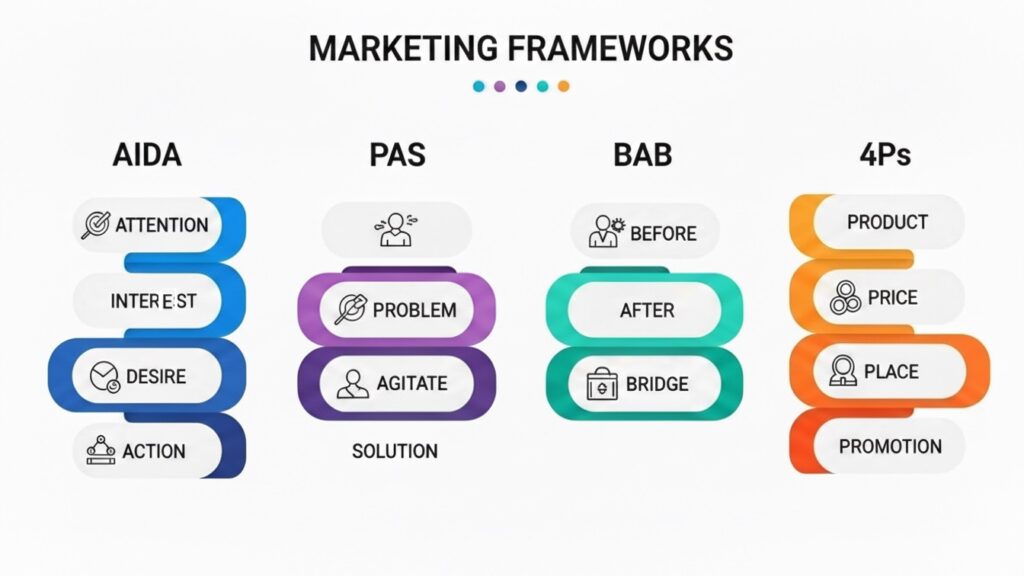
The AIDA Framework for Prompts
Adapt the classic Attention, Interest, Desire, Action model to structure your prompts:
Attention: Start by defining what should grab the audience
Interest: Specify what information builds engagement
Desire: Outline what benefits or transformations to highlight
Action: Define the clear next step you want the audience to take
Example Prompt: “Create a landing page headline and subheadline for a CRM software targeting real estate agents. Attention: Call out their pain point of losing leads. Interest: Mention automated follow-up features. Desire: Highlight how top agents close 40% more deals with organized follow-ups. Action: Drive them to start a free trial.”
The PAS Framework (Problem-Agitate-Solution)
This framework works brilliantly for pain-point-driven marketing content.
Example Prompt: “Write a 300-word email for a SaaS project management tool. Problem: Teams are missing deadlines, and tasks fall through the cracks. Agitate: Emphasize the stress of constant status meetings and client disappointment. Solution: Show how our tool provides one source of truth for all projects. Include a CTA to book a demo.”
The BAB Framework (Before-After-Bridge)
Perfect for transformation-focused marketing messages.
Example Prompt: “Create 5 Facebook ad headlines using the Before-After-Bridge framework for an online fitness coaching program. Before: Busy professionals who can’t find time for the gym. After: Same professionals who’ve lost 20 pounds working out 20 minutes at home. Bridge: Our personalized home workout plans that fit any schedule.”
The 4Ps Marketing Prompt Framework
For comprehensive campaign development, use the marketing mix model:
Product: What are you promoting and its key features?
Price: What’s the offer, discount, or value proposition?
Place: Where will this content appear (platform/channel)?
Promotion: What’s the marketing angle or campaign theme?
Example Prompt: “Develop a promotional campaign outline. Product: Premium coffee subscription delivering specialty beans monthly. Price: $29/month, offering 40% off the first box. Place: Instagram Stories and Reels. Promotion: ‘Skip the Coffee Shop, Upgrade Your Morning’ campaign focusing on quality and convenience. Include 5 content ideas with specific hooks.”
AI Prompts for Every Marketing Channel
Let’s get practical with channel-specific prompt templates you can adapt immediately.
1. Content Marketing Prompts
Blog Post Generation: “You’re a B2B content strategist. Write a 1,500-word blog post titled ‘[Your Title]’ for [target audience]. Include: 1) An attention-grabbing introduction with a surprising statistic, 2) 5 actionable tips with real examples, 3) A comparison table, 4) Expert quotes or case studies, 5) A conclusion with clear next steps. Use H2 and H3 headings for SEO. Write in a conversational but authoritative tone.”
Content Repurposing: “Take this [blog post/article/video transcript] and repurpose it into: 1) A Twitter thread (10 tweets), 2) A LinkedIn post (1,200 characters), 3) An Instagram carousel (5 slides with text), 4) An email newsletter section (300 words), 5) Three quote graphics for social media. Maintain the core message but adapt tone and format for each platform.”
Editorial Calendar Planning: “Create a 3-month content calendar for [your niche/industry] targeting [audience]. Include: Weekly blog post topics, 2 pillar content pieces per month, supporting social media themes, and suggested content types (how-to, listicle, case study, etc.). Consider seasonal trends and industry events in [months].”
2. SEO Optimization Prompts
Keyword Research Assistance: “Act as an SEO specialist. I’m targeting the primary keyword ‘[keyword]’. Generate: 1) 15 related long-tail keywords, 2) 10 question-based keywords people search for, 3) 5 comparison keywords (X vs Y), 4) LSI keywords to include naturally in content. Organize in a table with estimated search intent (informational, transactional, navigational).”
Meta Description Creation: “Write 5 versions of meta descriptions (150-160 characters) for a webpage about [topic]. Include the primary keyword ‘[keyword]’, a benefit or hook, and a subtle CTA. Make each version test a different angle: benefit-focused, question-based, urgency-driven, social-proof, and curiosity-gap.”
Content Optimization: “Review this article draft about [topic] and provide SEO optimization suggestions: 1) Headline improvements for better CTR, 2) Subheading restructuring for featured snippets, 3) Where to naturally add primary keyword ‘[keyword]’ and semantically related terms, 4) Internal linking opportunities, 5) FAQ section ideas that could capture featured snippets.”
3. Social Media Marketing Prompts
Platform-Specific Content: “Create 7 days of LinkedIn content for [professional service/role]. Each post should: 1) Start with a pattern-interrupt first line, 2) Share a professional insight or lesson, 3) Include a relevant story or example, 4) End with a question to drive comments. Vary post lengths and formats (text-only, list format, story format).”
Social Media Strategy: “Develop a 30-day Instagram strategy for [brand/product]. Include: 1) Content pillars (4 main themes), 2) Post frequency and format mix (feed posts, Reels, Stories, carousels), 3) 10 specific content ideas with captions, 4) Hashtag strategy with 20 relevant hashtags grouped by category, 5) Engagement tactics to build community.”
Viral Content Ideation: “You’re a social media manager who’s created multiple viral posts. Generate 10 content ideas for [platform] that have high viral potential for [niche]. For each idea, include: The hook/angle, content format, why it would resonate with [target audience], and the emotional trigger (humor, inspiration, outrage, surprise, etc.).”
4. Email Marketing Prompts
Welcome Series: “Create a 5-email welcome sequence for [business type] targeting new subscribers who downloaded [lead magnet]. Email 1: Thank you + deliver promise. Email 2: Quick win or tip. Email 3: Brand story and values. Email 4: Product/service introduction. Email 5: Social proof and offer. For each email, include: Subject line, preview text, body (250-300 words), and CTA.”
Re-engagement Campaign: “Write a 3-email re-engagement campaign for subscribers who haven’t opened emails in 90+ days. Use a conversational, curious tone. Email 1: ‘We miss you’ with personalized value reminder. Email 2: ‘What changed?’ asking for feedback with survey link. And Email 3: Last chance offer or sunset warning. Include attention-grabbing subject lines for each.”
Promotional Email: “Write a promotional email (400 words) for
targeting [audience]. Sale: [discount/offer]. Structure:1) Subject line (create urgency without being spammy), 2) Preheader text, 3) Opening that connects to a pain point, 4) Product benefits (not features), 5) Social proof element, 6) Clear CTA, 7) Urgency closer. Use short paragraphs and conversational tone.”
5. Paid Advertising Prompts
Google Ads Copy: “Create a complete Google Search Ad for
targeting keyword ‘[keyword]’. Include: 1) 15 unique headlines (30 characters max), 2) 4 description lines (90 characters max), 3) 5 callout extensions, 4) 3 structured snippet headers with items, 5) 2 sitelink ideas with descriptions. Focus on benefits, include pricing if available, and create urgency.”Facebook/Instagram Ads: “Develop 3 complete Facebook ad variations for
targeting [audience]. For each variation: 1) Primary text (hook in first line, 125 words total), 2) Headline (5 words max), 3) Description (20 words), 4) Visual concept description, 5) CTA button text. Test different angles: benefit-focused, problem-solution, social-proof.”A/B Testing Strategy: “I’m running ads for
. Create an A/B testing plan to optimize performance. Generate: 1) 5 different headline variations testing different value propositions, 2) 3 different opening hooks, 3) 2 different CTA approaches, 4) What metrics to track for each test, 5) How long to run each test, and decision criteria.”6. Branding & Storytelling Prompts
Brand Voice Definition: “Help me define my brand voice for [company/product]. Ask me 5 questions about my brand personality, target audience, and market position. Then create: 1) A brand voice chart (3 attributes with do’s and don’ts for each), 2) Example sentences showing voice in action, 3) Words to use and avoid, 4) Tone variations for different contexts (social, email, ads, customer service).”
Brand Story Development: “Craft a compelling brand origin story for [company] that connects emotionally with [target audience]. Include: 1) The problem or frustration that led to starting, 2) The ‘aha moment’ or turning point, 3) The struggle and how it was overcome, 4) How the solution helps customers now, 5) The bigger mission beyond profit. Keep it 300 words, use ‘we’ voice, make it authentic, not salesy.”
Campaign Theme Creation: “Generate 5 creative campaign theme ideas for
. For each theme: 1) Campaign name/tagline, 2) Core message, 3) Visual direction description, 4) 3 content execution ideas across different channels, 5) How it connects to [target audience] emotionally.”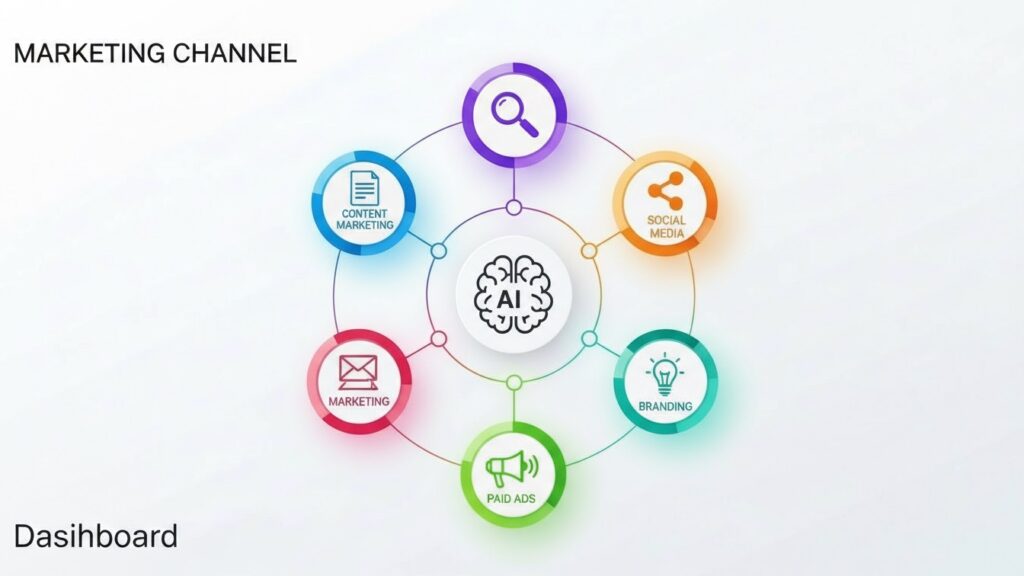
Prompt Examples: Bad vs Good
Learning what not to do is just as important as learning best practices. Let’s compare ineffective and effective prompts.
Example 1: Blog Content
❌ Bad Prompt: “Write a blog post about social media marketing.”
Why it fails: Too vague, no audience, no angle, no length, no specific outcome.
✅ Good Prompt: “You’re a social media consultant for small businesses. Write a 1,200-word beginner’s guide titled ‘Social Media Marketing for Local Businesses: Where to Start in 2026.’ Target audience: local shop owners with no marketing team. Include: 1) Which 2 platforms to focus on first, 2) Content ideas specific to local businesses, 3) A simple posting schedule, 4) Basic metrics to track. Use H2 headings, bullet points, and a friendly, encouraging tone. Goal: Get them to post their first content this week.”
Example 2: Social Media Content
❌ Bad Prompt: “Create an engaging Instagram post.”
Why it fails: “Engaging” is subjective, no topic, no format guidance, no hook.
✅Good Prompt: “Create an Instagram carousel post (5 slides) for fitness coaches. Topic: ‘5 Biggest Myths Stopping Your Clients from Reaching Their Goals.’ For each slide: Bold myth statement as headline, 2-sentence truth explanation below, relevant emoji. Slide 1 is the cover with a hook question. The final slide has a CTA to save and share. Write in a motivating but science-backed tone. Include caption (150 words) with 3-sentence story hook and 15 hashtags.”
Example 3: Email Marketing
❌ Bad Prompt: “Write a marketing email.”
Why it fails: No product, no audience, no purpose, no structure.
✅Good Prompt: “Write a cart abandonment email for an online bookstore. The customer left a business book in their cart. Email structure: 1) Subject line using curiosity (not ‘forgot something’), 2) Opening acknowledges their interest in business growth, 3) Single-sentence reminder of the book they selected, 4) Two bullet points on why other customers loved it (focus on practical transformation), 5) Limited-time 15% discount code, 6) Soft CTA (not pushy). Keep total length under 200 words. Friendly and helpful tone, not desperate.”
Example 4: Ad Copy
❌ Bad Prompt: “Make an ad for my product.”
Why it fails: No platform, no product details, no audience, no offer.
✅ Good Prompt: “Create a Facebook ad for a productivity app targeting overwhelmed startup founders. The app’s unique feature: AI-powered task prioritization. Offer: 7-day free trial. Ad structure: 1) Primary text starts with relatable frustration (too many tasks, not enough time), 2) Introduce solution in one clear sentence, 3) Mention AI-prioritization as the differentiator, 4) Include micro-testimonial or stat (95% of users complete 3x more important tasks), 5) Clear CTA to start free trial. Headline: Benefit-focused, 6 words max. Conversational tone, no hype.”
Advanced Prompt Engineering Techniques
Once you’ve mastered the basics, these advanced techniques will take your AI marketing to the next level.
Chain-of-Thought Prompting
This technique asks AI to think through problems step-by-step, leading to more strategic and coherent outputs.
Example: “Let’s develop a content strategy for a SaaS startup step by step. First, analyze the target audience (B2B tech managers) and list their 5 biggest pain points. Second, for each pain point, suggest 2 content topics that address it. Third, prioritize these topics by search volume potential and business impact. Fourth, create a 3-month publishing calendar. Show your thinking at each step.”
This produces more strategic results because the AI is literally working through the process with you.
Multi-Step Prompts
Break complex tasks into sequential prompts, using each output to inform the next.
Step 1: “Analyze this product description: [paste description]. List 10 customer pain points this product solves.”
Step 2: “Take these pain points and rank them by emotional intensity for [target audience]. Explain your ranking.”
Step 3: “Create 5 ad headlines that tap into the top 3 highest-ranked pain points. Use the PAS framework.”
This approach gives you more control and often better results than trying to do everything in one mega-prompt.
Iterative Refinement
Use follow-up prompts to improve initial outputs rather than starting over.
Initial Prompt: “Write an Instagram caption about productivity tips.”
Output: [Generic productivity advice]
Refinement Prompt: “Rewrite this caption but: 1) Make the opening line a pattern-interrupt question, 2) Add a personal anecdote in the middle, 3) Include specific numbers instead of vague claims, 4) End with a question that drives comments.”
This teaches you what elements make outputs better while improving your current result.
Role Stacking
Combine multiple expert perspectives in a single prompt.
Example: “You’re both a copywriter who’s written for Fortune 500 brands AND a conversion rate optimization specialist with 15 years of testing data. Write a landing page headline for . First, from the copywriter’s perspective, focus on emotional resonance and brand voice. Then, from the CRO perspective, analyze if it’s clear, specific, and benefit-driven. Finally, create a version that balances both perspectives.”
This produces more well-rounded outputs that consider multiple success factors.
Constraint-Based Creativity
Push creative boundaries by adding unusual constraints.
Example: “Create 5 email subject lines for a summer sale. Constraints: Cannot use the words ‘sale,’ ‘discount,’ ‘save,’ or any percentage. Cannot use emoji. Must create curiosity without being clickbait. Must be under 40 characters.”
Constraints force the AI (and you) to think more creatively rather than defaulting to obvious approaches.
Temperature Adjustment Through Language
While you can’t directly control AI temperature in most interfaces, you can influence creativity through your prompt language.
For Creative/Varied Outputs: “Generate 10 wildly different Instagram caption styles for [topic]. Make each one unique in voice, format, and approach. Surprise me.”
For Consistent/Predictable Outputs: “Generate 10 Instagram captions for [topic] following this exact formula: [Hook question] + [2-sentence explanation] + [CTA question]. Maintain consistent tone and structure.” For more detailed Prompt engineering techniques, visit the Chain-of-Thought Prompting guide for super reasoning.
Common Mistakes Marketers Make With AI Prompts
Even experienced marketers fall into these traps. Let’s address them so you don’t have to learn the hard way.
Mistake 1: Being Too Vague
The Problem: “Create content for my brand.”
What platform? What audience? And what is the goal? AI will guess, and it will probably guess wrong.
The Fix: Specificity is your friend. Always include: format, audience, goal, tone, and constraints.
Mistake 2: Forgetting to Specify What NOT to Do
The Problem: You get perfectly structured output that includes all the tired marketing clichés you hate.
The Fix: Add a “avoid” section: “Do not use phrases like ‘game-changer,’ ‘unlock,’ ‘leverage,’ or ‘dive deep.’ Avoid salesy language and hype.”
Mistake 3: Not Providing Brand Context
The Problem: Generic output that could be for any company in your industry.
The Fix: Include 2-3 sentences about your brand voice, values, or unique positioning in every prompt. Create a “brand context snippet” you can copy-paste.
Mistake 4: Treating AI Like a Finished Product Generator
The Problem: Expecting publication-ready content without any human touch.
The Fix: Think of AI as your first draft generator or brainstorming partner. Plan to refine, inject your unique insights, and add human touches.
Mistake 5: Not Iterating
The Problem: Getting a mediocre result and moving on instead of refining.
The Fix: Use follow-up prompts: “Make this more concise,” “Add a personal story angle,” “Rewrite the opening to be more attention-grabbing.”
Mistake 6: Overloading a Single Prompt
The Problem: Asking for 10 different things in one prompt and getting a muddled result.
The Fix: Break complex requests into multiple sequential prompts. Get one thing right, then build on it.
Mistake 7: Ignoring Platform Differences
The Problem: Using the same prompt for LinkedIn and TikTok content.
The Fix: Always specify the platform and its unique conventions: “Instagram Reels (fast-paced, hook in first 2 seconds, trending audio)” vs “LinkedIn article (professional, data-driven, longer-form).”
Mistake 8: Not Testing Different Approaches
The Problem: Using the same prompt structure for everything.
The Fix: Experiment with different frameworks (AIDA vs PAS), different role prompts, and different constraint levels. Keep what works.
Essential Tools for AI Prompt Engineering in Marketing
Here’s your toolkit for becoming a prompt engineering pro.
AI Platforms for Marketing
ChatGPT (OpenAI): Best for conversational content, brainstorming, and long-form content generation. The GPT-4 model excels at understanding nuanced marketing requirements.
Claude (Anthropic): Excellent for longer context windows (perfect for analyzing entire campaigns or documents), nuanced tone control, and following complex instructions. Great for brand voice consistency.
Google Gemini: Strong for research-backed content, integrating with Google Workspace, and data analysis tasks. Useful for SEO research and competitor analysis.
Jasper/Copy.ai: Purpose-built for marketers with templates and workflows specifically designed for marketing content. Ideal for beginners seeking guided experiences.
Prompt Management Tools
PromptBase: Marketplace for buying and selling effective prompts. Great for finding tested prompt templates for specific marketing tasks.
FlowGPT: Community-driven prompt sharing platform. See what prompts other marketers are using and getting results from.
Notion/Airtable: Create your own prompt library. Save your best-performing prompts with notes on what worked and for which contexts.
Productivity Enhancers
Text Expander/Alfred: Create shortcuts for your frequently used prompt components. Type “//brand” and it expands to your full brand context paragraph.
Browser Extensions: Tools like AIPRM add prompt templates directly to the ChatGPT interface for quick access.
Testing and Optimization
AB Testing Platforms: Use tools like Optimizely or Google Optimize to test AI-generated variants against each other and human-written content.
Content Analysis Tools: Hemingway Editor, Grammarly, or Yoast SEO to analyze and improve AI outputs before publishing.
Best Practice: Build Your Prompt Library
Create a personal prompt library organized by:
- Channel (email, social, ads, blog)
- Goal (engagement, conversion, awareness)
- Format (listicle, how-to, case study)
Document what worked, what didn’t, and why. This becomes your competitive advantage—your proprietary prompt IP.
The Future of AI Prompt Engineering in Digital Marketing
The landscape is evolving rapidly. Here’s what’s coming and how to prepare.
Trend 1: Multi-Modal Prompting
We’re moving beyond text. Future prompts will combine text, images, video, and audio inputs.
What This Means: You’ll prompt AI with your brand’s visual assets, and it will generate copy that matches the visual style. Or upload a competitor’s video ad and prompt AI to analyze their strategy and create alternatives.
How to Prepare: Start thinking visually about your prompts. Practice describing visual concepts and brand aesthetics in text form.
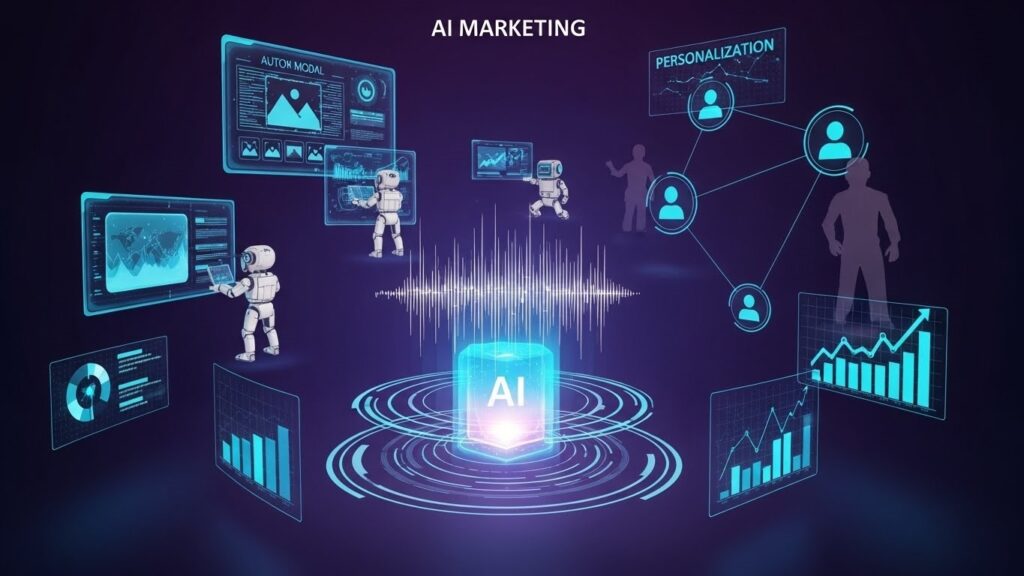
Trend 2: Autonomous AI Marketing Agents
Instead of one-off prompts, you’ll set up AI agents that run ongoing marketing operations.
What This Means: An AI agent might monitor your social media performance, notice an engagement drop, analyze why, generate new content variations, test them, and report results—all autonomously.
How to Prepare: Start thinking in terms of instructions and objectives rather than individual tasks. Learn to prompt for systems and processes, not just content.
Trend 3: Real-Time Personalization at Scale
AI will generate personalized content for individual users based on their behavior, preferences, and context.
What This Means: Instead of creating one email campaign, you’ll prompt AI to create personalized versions for each subscriber based on their engagement history.
How to Prepare: Practice prompting with variable inputs. Learn to create prompt templates that can be dynamically filled with user data.
Trend 4: Prompt Engineering as a Core Marketing Skill
Just like SEO and social media became essential marketing skills, prompt engineering is becoming non-negotiable.
What This Means: Job descriptions will require “AI prompt proficiency.” Salaries will reflect this skill. Those who master it early will have significant advantages.
How to Prepare: Treat prompt engineering as a learnable, valuable skill. Practice daily, document your learning, and build your prompt portfolio.
Trend 5: AI-Resistant Content Differentiation
As AI-generated content floods the market, truly human elements become more valuable.
What This Means: The winning formula will be AI efficiency + human creativity and authenticity. Pure AI content will become background noise.
How to Prepare: Use AI for structure, research, and first drafts, but always inject your unique perspective, experiences, and voice.
FAQ’s AI Prompt Engineering for Marketing
A: AI prompt engineering for marketing is the practice of crafting specific instructions and questions for AI tools like ChatGPT, Claude, or Gemini to generate high-quality marketing content. It involves using clear language, providing context, setting constraints, and applying frameworks to get AI to produce content that aligns with your brand voice, audience needs, and marketing goals. Good prompt engineering turns generic AI outputs into publication-ready marketing materials.
A: Prompt engineering is crucial because it determines the quality of AI-generated marketing content. Well-crafted prompts can reduce content creation time by 70%, minimize revision cycles, maintain brand consistency, and generate multiple campaign variations quickly. As AI becomes standard in marketing, the competitive advantage lies not in having access to AI tools but in using them more effectively than competitors through superior prompt engineering skills.
A: A good marketing prompt includes five key elements: (1) Clear role definition for the AI (e.g., “You’re a social media strategist”), (2) Specific context about your brand and audience, (3) Detailed format and length requirements, (4) Explicit tone and style guidelines, and (5) Clear constraints on what to avoid. For example, instead of “write a blog post,” a good prompt specifies audience, word count, key points to cover, desired tone, and the action you want readers to take.
A: The best AI tool depends on your specific needs. ChatGPT (GPT-4) excels at conversational content and brainstorming. Claude is excellent for longer content and maintaining a consistent brand voice. Google Gemini integrates well with Google Workspace and is strong for research-backed content. For beginners, purpose-built tools like Jasper or Copy.ai offer marketing-specific templates. Most professional marketers use multiple tools for different tasks rather than relying on just one.
A: There’s no fixed length, but effective marketing prompts typically range from 50 to 300 words, depending on complexity. Simple tasks like social media captions might need 2-3 sentences, while comprehensive campaign briefs could require several paragraphs. The key is including enough detail for clarity without overwhelming the AI. Focus on relevant context, specific requirements, and clear constraints rather than arbitrary word count.
A: The most effective marketing prompt frameworks are: (1) AIDA (Attention, Interest, Desire, Action) for sales-focused content, (2) PAS (Problem, Agitate, Solution) for pain-point marketing, (3) BAB (Before-After-Bridge) for transformation stories, and (4) 4Ps (Product, Price, Place, Promotion) for comprehensive campaigns. Each framework structures your prompt to guide AI toward specific marketing outcomes. Choose based on your content goal and audience psychology.
A: Maintain brand voice by including a “brand context snippet” in every prompt. This 2-3 sentence description should cover your brand personality (e.g., “friendly but professional”), tone preferences (e.g., “conversational, not corporate”), words to use and avoid, and your unique positioning. Additionally, provide examples of your best content as a reference and explicitly state what makes your brand different. Always review and add human touches to AI outputs before publishing.
A: Yes, but prompts must be tailored to each channel’s unique requirements. Instagram prompts need to specify character limits, emoji usage, and visual hooks. LinkedIn prompts should emphasize professional tone and thought leadership. Email prompts require subject line optimization and CTA placement. Google Ads prompts need character count restrictions and keyword inclusion. The core prompt engineering principles apply universally, but execution details vary significantly by platform.
A: The most common mistakes include: (1) Being too vague without specific requirements, (2) Not providing brand or audience context, (3) Expecting publication-ready content without human editing, (4) Using the same generic prompts across different platforms, (5) Not specifying what to avoid (leading to clichés and hype), (6) Overloading one prompt with too many requests, and (7) Not iterating or refining outputs. Most mistakes stem from treating AI like a magic button rather than a tool requiring skilled direction.
A: For SEO-optimized prompts, include: (1) Primary and secondary keywords naturally in the prompt, (2) Target audience and search intent (informational, transactional, navigational), (3) Content structure requirements (H2/H3 headings, meta description, word count), (4) Competitor content to differentiate from, and (5) Specific ranking factors like featured snippet optimization or FAQ inclusion. Example: “Write a 1,500-word guide on [topic] targeting [keyword]. Include H2 headings optimized for featured snippets, answer common questions, and provide actionable tips.”
A: Effective social media prompts should specify: (1) Platform and its conventions (Instagram Reels need hooks in first 2 seconds, LinkedIn needs professional context), (2) Content format (carousel, single post, thread, video script), (3) Character or word limits, (4) Engagement tactics (questions, polls, CTAs), (5) Hashtag strategy, and (6) Brand voice. Example: “Create 5 Instagram carousel post ideas for [niche]. Each slide should have a bold headline and a 2-sentence explanation. Include hooks that stop scrolling and CTAs that drive saves.”
A: Basic prompt engineering involves clear instructions with context and constraints. Advanced techniques include: (1) Chain-of-thought prompting (asking AI to think step-by-step), (2) Multi-step prompts that build on previous outputs, (3) Role stacking (combining multiple expert perspectives), (4) Iterative refinement through follow-up prompts, and (5) Constraint-based creativity (using limitations to force innovative solutions). Advanced users also create reusable prompt templates and systematically test variations for optimization.
A: Email marketing prompts should include: (1) Email type (welcome, promotional, abandoned cart, newsletter), (2) Subscriber segment and their journey stage, (3) Key message or offer, (4) Required elements (subject line, preview text, CTA), (5) Length constraints, (6) Tone (conversational vs. formal), and (7) Desired action. Example: “Write a 3-email abandoned cart sequence for an online fashion store. Email 1: Gentle reminder (send 1 hour after abandonment). Email 2: Social proof + urgency (24 hours). And Email 3: Discount offer (48 hours). Include subject lines with 50% open rate potential.”
A: No, AI prompt engineering is a tool that amplifies human creativity rather than replacing it. AI excels at generating first drafts, variations, and structured content quickly, but it lacks genuine creativity, strategic thinking, emotional intelligence, and understanding of nuanced business context. The winning approach combines AI efficiency with human insight—using AI for mechanical tasks. In contrast, humans focus on strategy, brand building, authentic storytelling, and adding unique perspectives that AI cannot replicate.
A: Basic prompt engineering skills can be learned in 1-2 weeks of daily practice. You’ll start seeing improved results immediately. Intermediate proficiency takes 4-6 weeks of consistent use across different marketing tasks. Advanced mastery requires 3-6 months of experimentation, building a prompt library, and refining techniques. The learning curve isn’t steep; it’s more about deliberate practice than complex theory. Start with simple prompts, document what works, iterate based on results, and gradually incorporate advanced techniques as you gain confidence.
Conclusion: AI Prompt Engineering for Marketing
You’ve now got a comprehensive understanding of AI prompt engineering for marketing. But knowledge without action is just entertainment. Here’s your roadmap to actually implementing this.
Week 1: Foundation Building
- Choose your primary AI platform based on your needs
- Create 5 test prompts using the frameworks in this guide
- Document what works and what doesn’t
- Start your personal prompt library in Notion or a doc
Week 2-3: Channel Specialization
- Pick your top 2 marketing channels
- Create 10 channel-specific prompts for each
- Test them on real marketing tasks
- Refine based on results
Week 4: Advanced Techniques
- Experiment with chain-of-thought prompting
- Try role stacking for complex tasks
- Practice multi-step prompting workflows
- Start building prompt templates you can reuse
Ongoing: Continuous Improvement
- Spend 15 minutes daily practicing prompt writing
- Join AI marketing communities to share and learn prompts
- Test new AI models and platforms as they emerge
- Update your prompt library monthly with your best discoveries
Three Things to Remember
First: Prompt engineering is a skill, not a talent. You get better with deliberate practice. Your first prompts will be mediocre. Your 100th will be dramatically better.
Second: The goal isn’t to replace human creativity, it’s to amplify it. Use AI to handle the mechanical parts so you can focus on strategy, creativity, and the human touches that make marketing memorable.
Third: Start small, but start today. Don’t wait to have perfect prompts. Use what you learned here on your next marketing task, even if it’s just testing one framework or adding more specificity to a basic prompt.
Your Next Step
Open your AI tool of choice right now and try this prompt:
“You’re a marketing strategist. Based on my role as [your role] working on [your main marketing challenge], suggest 3 specific ways I could use AI prompt engineering this week to improve my results. For each suggestion, provide a starter prompt I can customize and use immediately.”
That one action will get you started. And starting is everything.
The future of marketing isn’t human vs. AI. It’s humans who can effectively direct AI vs. humans who can’t. Make sure you’re in the first category.
Now go and create something remarkable.
Ready to dive deeper? Bookmark this guide and revisit it as you practice. Each section will make more sense as you gain hands-on experience. The marketers who win with AI won’t be those who read the most guides; they’ll be those who implement, test, and iterate relentlessly.
Your competitive advantage is being built right now, one prompt at a time.
Related Articles:
AI Prompting for Beginners: Complete Guide

Recent Comments